Affordability Is Improving on Martha’s Vineyard
What shifting numbers mean for Island buyers and sellers
There’s finally a little good news for anyone who’s been priced out or sitting on the sidelines.
Buying a home is getting more affordable.
Before we get carried away — no, homes are not suddenly “cheap.” But after several years of rapid price growth and elevated mortgage rates, the pressure buyers have been feeling is beginning to ease. And that shift matters.
Affordability Is Finally Moving in the Right Direction
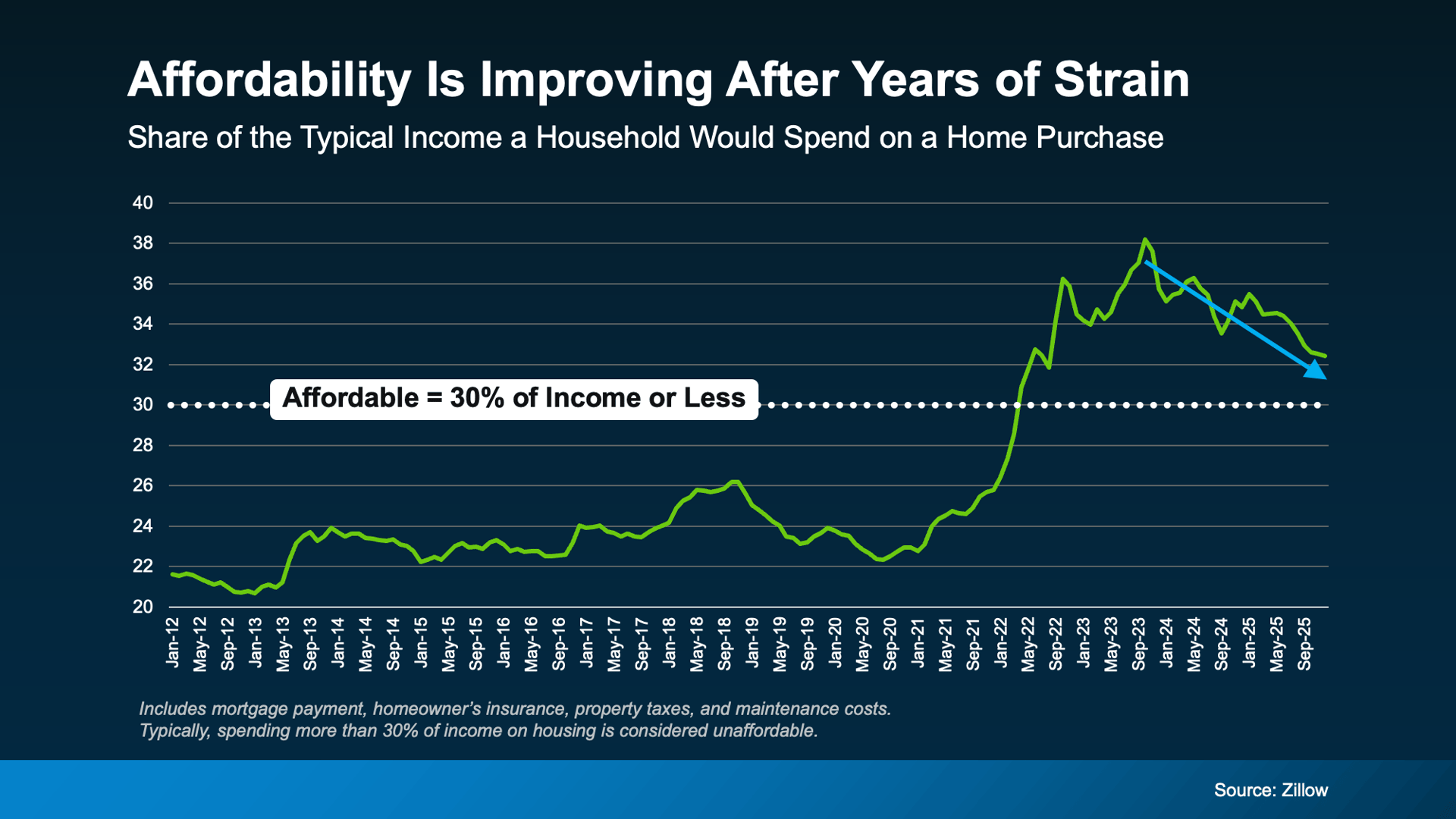
One of the clearest ways to measure affordability is by looking at how much of a household’s income goes toward housing costs — including mortgage payment, property taxes, insurance, and basic maintenance.
According to Zillow Research, housing is typically considered affordable when it requires 30% or less of a household’s income. Over the past few years, that percentage climbed well above that benchmark in many parts of the country, making homeownership feel out of reach.
Now, that number is beginning to trend downward.
We’re not fully back to that 30% threshold nationally. But the direction has changed — and after years of worsening affordability, that’s meaningful progress.
Zillow research shows it’s taking less of a typical household’s income to buy a home than it did just a few years ago (see graph below):
Why Affordability Is Improving
Three key forces are working in buyers’ favor:
1. Mortgage Rates Have Eased
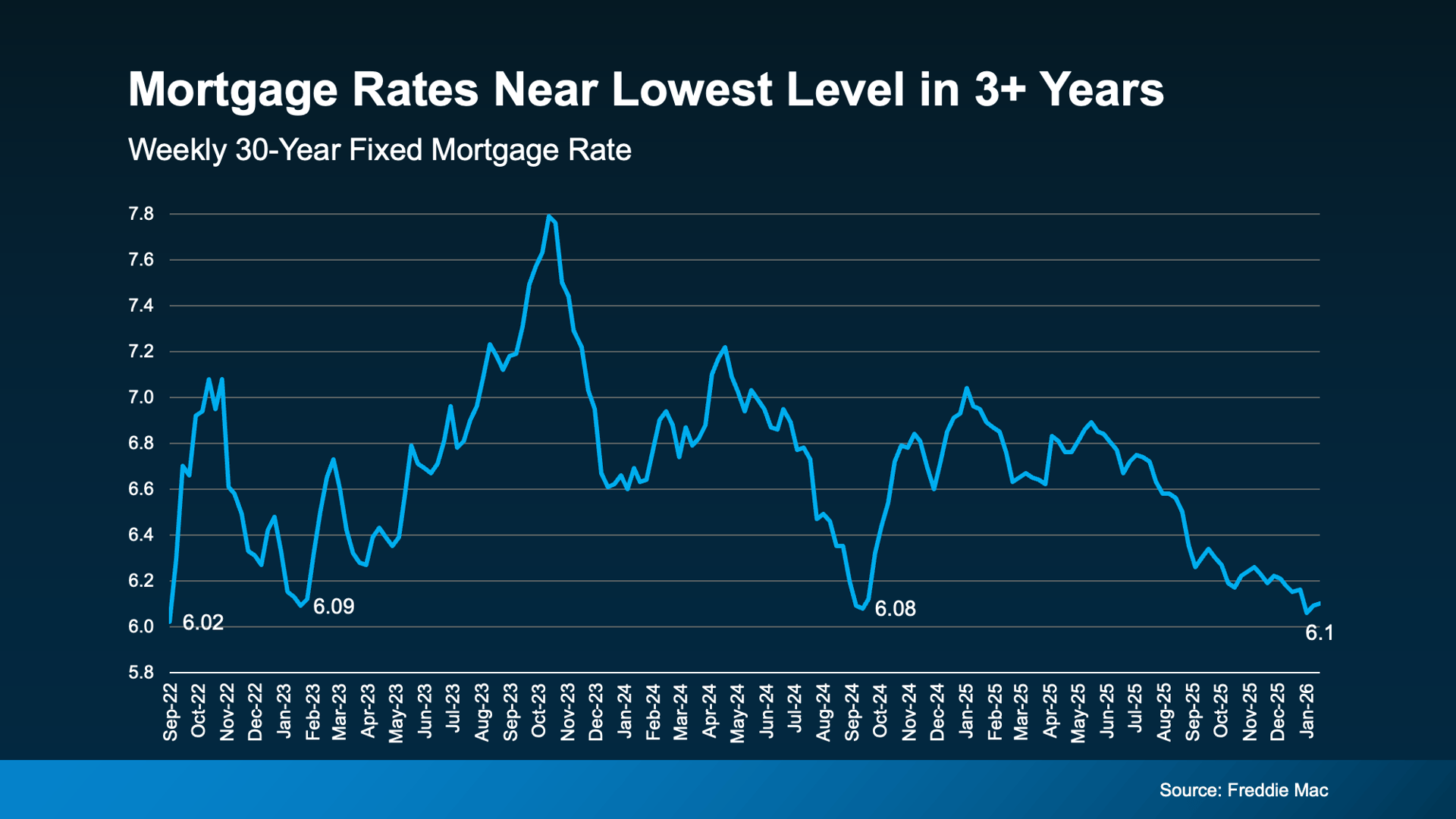
Mortgage rates are near their lowest levels in more than three years, according to Freddie Mac’s Primary Mortgage Market Survey. While rates remain higher than the historic lows of 2020–2021, even modest improvements can significantly reduce monthly payments.
For buyers who ran the numbers a year ago and stepped back, today’s payment picture may look different.
Rates are near their lowest level in more than three years, which helps lower monthly payments (see graph below):
2. Home Price Growth Has Cooled
Nationally, prices are still rising — but at a much slower pace than during the double-digit appreciation years of 2021 and 2022. Recent data from the National Association of Realtors shows price growth has moderated compared to pandemic peaks.
This isn’t a correction. It’s normalization.
Slower growth makes pricing more predictable and prevents the kind of rapid monthly payment increases buyers faced in previous years.
3. Wages Are Growing Faster Than Home Prices
When income growth exceeds house price growth, buying power improves. Economic analysis from First American’s housing research team continues to highlight this trend nationally.
Affordability doesn’t depend solely on mortgage rates. It depends on how well income keeps up with housing costs.
Taken together, these three forces explain why economists expect gradual affordability improvement into 2026.
No overnight miracle. Just steady alignment.
What Does This Mean for Martha’s Vineyard?
Now let’s bring it local.
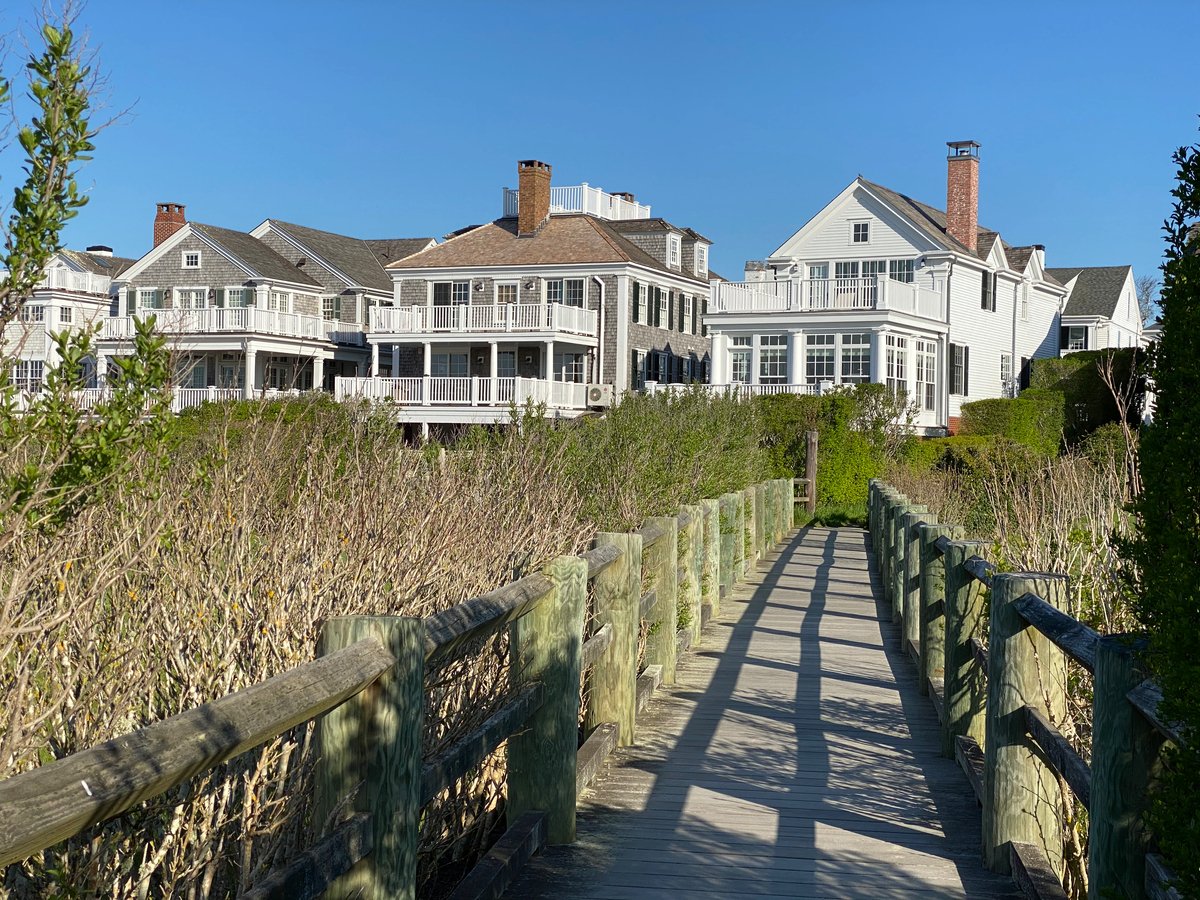
Martha’s Vineyard is not a typical market. With an average sale price hovering around $1.9 million across the Island (per data from LINK MLS), we operate at a significantly higher price point than most U.S. markets.
But affordability trends still matter here. They just show up differently.
1. Inventory Is Healthier Than It Was
Compared to the ultra-tight inventory conditions of 2021–2023, we’re seeing a more balanced supply of homes on the market.
When inventory rises:
-
Buyers gain options
-
Negotiation becomes more realistic
-
Sellers must price strategically
More choice creates leverage. And leverage improves affordability — not necessarily because prices drop, but because buyers have room to negotiate terms.
You can explore current Martha’s Vineyard homes for sale to see how supply has shifted.
2. The Frenzy Has Cooled
We’re no longer seeing the intense bidding wars that defined the pandemic surge.
The Vineyard market has moved from frenzy to balance.
That shift allows buyers to:
-
Conduct proper inspections
-
Negotiate contingencies
-
Evaluate long-term value more thoughtfully
Predictability reduces financial risk — and that contributes to improved affordability.
3. Buyers Here Think Long-Term
Many Vineyard purchases are second homes, lifestyle properties, or long-term investments. Buyers often consider:
-
Rental income potential
-
Long-term appreciation
-
Generational value
-
Personal lifestyle return
With mortgage rates easing and income growth improving nationally, some buyers who paused in 2023 or early 2024 are beginning to re-run the math — and finding it more workable.
Where Affordability Is Improving First
According to Zillow’s latest housing outlook, some markets may dip back below the traditional affordability benchmark by year-end.
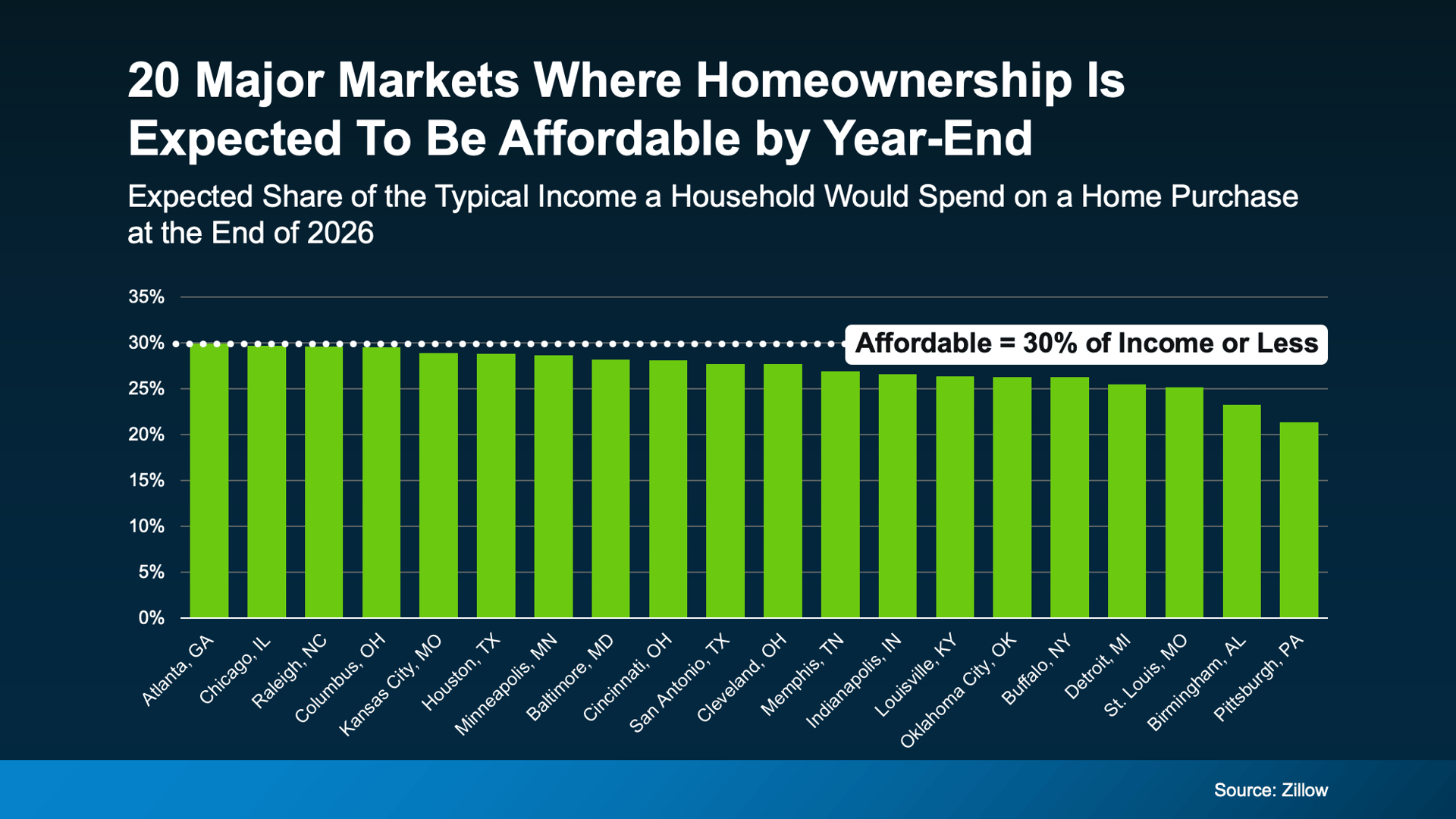
The Vineyard is unlikely to fall under that benchmark anytime soon — and that’s realistic. We are a premium coastal market with limited land and strong long-term demand.
But affordability doesn’t improve everywhere at the same speed.
On Martha’s Vineyard, improvement may show up as:
-
Longer days on market
-
Increased negotiation flexibility
-
Strategic price adjustments
-
Fewer bidding wars
For prepared buyers, those conditions create opportunity.
The Bottom Line
For the first time in several years, affordability is easing.
Mortgage rates have softened. Price growth has cooled. Income growth is restoring buying power.
On Martha’s Vineyard, that shift appears through healthier inventory levels, balanced negotiations, and buyers stepping back into the market with renewed clarity.
Affordability won’t snap back overnight. But the direction has changed.
If you’d like to understand how these trends affect your specific town, price range, or timeline, connect with The O’Hanlon Group. We’ll help you interpret the numbers and position yourself strategically in today’s market.